
How V-Soft Modernized Network Infrastructure for a Fortune 50 Life Sciences Company
Replaced 50 network devices, improved reliability, visibility, and maintained zero operational downtime.
Snapshot
A Fortune 50 life sciences company was operating a manufacturing site with network infrastructure nearing end-of-life. Disorganized data cabling and limited network documentation were making maintenance, troubleshooting, and future expansion increasingly difficult.
The client needed to modernize the network without disrupting manufacturing operations. V-Soft assessed the existing infrastructure, planned the hardware replacement in phases, reorganized cabling, and upgraded critical network equipment during planned shutdown periods.
50
Network Devices Replaced
Zero
Operational Downtime During Implementation
Improved
Reliability & Speed
Scalable
Network Foundation for Future Expansion
The Business Challenge
An Aging Network Was Becoming a Manufacturing Constraint
The existing infrastructure was making routine maintenance and troubleshooting more difficult while limiting the team’s visibility into the physical network. Without a clear understanding of the environment, future planning and expansion required greater effort and introduced additional risk.
These issues created more than an infrastructure maintenance problem. They made troubleshooting harder, complicated future planning, and introduced friction into the site’s ability to expand its network environment as digital transformation needs evolved.
For a manufacturing operation where network reliability and availability are critical, the client needed to modernize its infrastructure without creating operational disruption.
Several interconnected constraints shaped how modernization had to be approached.
Underlying Constraints
Aging Infrastructure Was Creating Visibility Gaps and Operational Risks
The modernization had to address multiple infrastructure gaps while keeping manufacturing operations running.

End-of-Life Network Infrastructure
Aging network equipment was approaching the end of its lifecycle, creating a need for modernization before reliability and supportability became larger operational concerns.
Disorganized Cabling
Unstructured cabling made racks harder to maintain and troubleshoot while consuming valuable rack space and limiting visibility into the physical network environment.
Limited Infrastructure Visibility
The lack of comprehensive network documentation made it difficult to understand the existing infrastructure and plan future changes with confidence.
No Room for Operational Disruption
The manufacturing environment could not tolerate disruption during the network upgrade, requiring careful planning, implementation, and work around planned shutdown periods.
The Build
Modernizing the Network in Controlled Phases
V-Soft approached the modernization as a structured infrastructure upgrade rather than a simple hardware replacement. The work began with a detailed site survey and continued through phased equipment replacement, cable cleanup, and structured wire management.

Site Survey & Infrastructure Assessment
The team assessed switches, rack space, fiber, and open ports to establish better visibility into the existing environment and support future planning.
Phased Hardware Replacement
Hardware was replaced in planned phases, particularly around holiday shutdown periods, helping maintain continuous manufacturing operations during implementation.
Cable Cleanup & Structured Wire Management
Unused ports were removed, shorter patch cables were introduced, and structured wire management improved rack organization, airflow, and maintainability.
Network Documentation
The modernization improved understanding of the infrastructure layout, providing a clearer baseline for ongoing IT infrastructure planning and support.
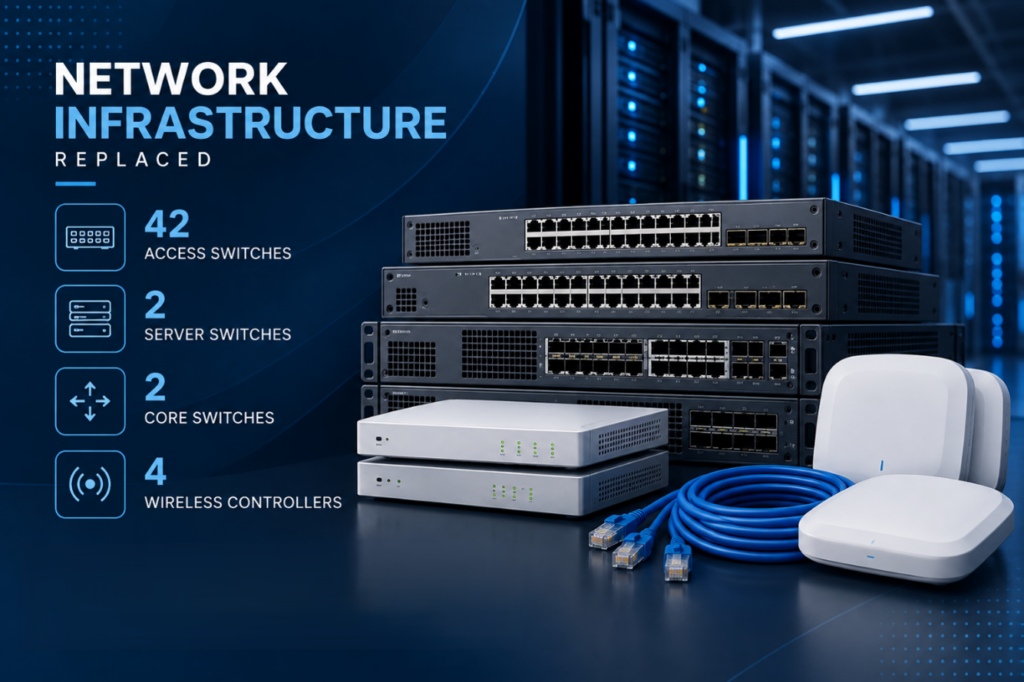
What Changed
From Aging Infrastructure to a More Structured Network Environment
| Before | After |
|---|---|
| Network infrastructure nearing end-of-life | Modernized network equipment supporting reliable operations |
| Disorganized data cabling | Cleaner racks with structured wire management |
| Difficult maintenance and troubleshooting | Improved physical organization and easier troubleshooting |
| Limited infrastructure visibility | Comprehensive network documentation |
| Upgrade activity could disrupt operations | Phased implementation with zero operational downtime |
| Infrastructure constrained future planning | Network foundation designed for expansion |
Business Impact
A More Reliable Network Foundation for Modern Manufacturing
The modernization gave the client a more organized and maintainable network environment with clearer visibility into its network infrastructure. Upgraded network equipment improved reliability and speed, while organized cabling simplified troubleshooting and created a cleaner, more manageable rack environment.
The phased implementation approach allowed the network to be modernized while maintaining continuity across manufacturing operations. Improved documentation also established a clearer baseline for future infrastructure planning, maintenance, and expansion.